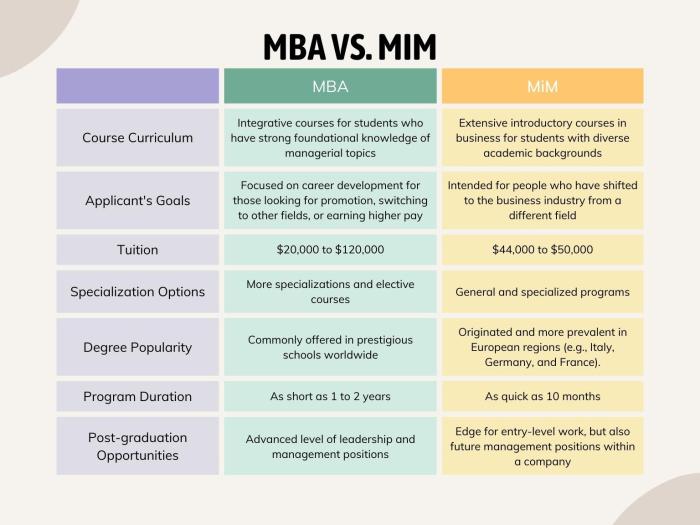
MBA Course Requirements A Comprehensive Overview
MBA Course Requirements are essential for anyone looking to advance their career through higher education. Understanding these requirements not only helps prospective students navigate the application process but also sets the foundation for a successful academic journey. With the right qualifications and insights, you can position yourself for success in one of the most sought-after degrees in the business world.
This overview will delve into the critical elements that constitute MBA course requirements, including admission criteria, academic prerequisites, and financial considerations. By familiarizing yourself with these aspects, you can make informed decisions on your path to earning an MBA.
Overview of MBA Course Requirements
Understanding the requirements for pursuing an MBA is crucial for prospective students. This knowledge not only helps in the application process but also prepares candidates for what to expect throughout their studies. MBA programs are designed to equip students with the skills necessary to thrive in various business environments, and meeting the prerequisites is the first step toward achieving that goal.Typically, MBA course requirements include a combination of educational qualifications, professional experience, standardized test scores, and other supporting documents.
These criteria ensure that applicants possess the foundational knowledge and skills necessary to succeed in the rigorous academic environment of an MBA program. Furthermore, understanding these requirements can guide potential students in making informed decisions about their career paths and educational journeys.
General Educational Qualifications for MBA Programs
Most MBA programs require candidates to hold a bachelor’s degree from an accredited institution. This degree can be in any field; however, a background in business or a related discipline often provides a smoother transition into MBA coursework. Additionally, many programs prefer applicants to have a minimum GPA, typically around 3.0 on a 4.0 scale.It is common for MBA applicants to have a few years of professional experience, which enhances their application and enriches classroom discussions.
This work experience often ranges from two to five years, allowing students to bring practical insights into academic concepts. Standardized test scores, such as the GMAT or GRE, are frequently part of the application process. These scores help schools assess an applicant’s analytical, quantitative, and verbal skills, which are essential for success in graduate-level business education.
“An MBA program is not just an academic experience; it’s a transformative journey rooted in practical business applications.”
In addition to these requirements, aspiring MBA candidates may also need to submit letters of recommendation, personal statements, and resumes. These documents provide schools with a comprehensive view of the applicant’s capabilities, aspirations, and suitability for the program.Overall, understanding the educational qualifications and other requirements for MBA programs empowers prospective students to prepare adequately and increases their chances of acceptance into competitive programs.
Admission Criteria
The admission criteria for MBA programs serve as a crucial gateway for prospective students aiming to advance their careers. Understanding these criteria is essential for crafting a competitive application. The requirements generally encompass several key components that admissions committees evaluate to determine an applicant’s suitability for their programs.The first major component involves standardized test scores, specifically the GMAT or GRE.
These scores play a significant role in the selection process, as they provide a uniform measure of applicants’ analytical and quantitative abilities. Each business school has its own average score range, which can greatly influence admission decisions.
Standardized Test Scores
The GMAT (Graduate Management Admission Test) and GRE (Graduate Record Examination) are standardized tests that assess verbal, mathematical, and analytical writing skills. The importance of these scores lies in their ability to evaluate a candidate’s readiness for the rigorous academic environment of an MBA program.
Many top-tier business schools consider a strong GMAT or GRE score as an indicator of potential academic success.
Admissions committees often have specific score benchmarks that correlate with successful student outcomes. Prospective students should aim for scores that meet or exceed the average for their chosen programs. Preparing for these exams typically involves a combination of study resources, practice tests, and sometimes preparatory courses.
Work Experience
Work experience is another critical criterion that many MBA programs prioritize. It provides context to a candidate’s academic achievements and test scores, showcasing real-world skills and leadership potential. Most programs require candidates to have a minimum amount of professional experience, often ranging from two to five years. This experience not only enriches classroom discussions but also allows students to apply theoretical concepts in practical settings.
Having relevant work experience distinguishes candidates in a competitive applicant pool.
Candidates who have worked in diverse roles or industries may have an advantage, as they can contribute varied perspectives to group projects and discussions. Furthermore, those in leadership positions or with managerial responsibilities often demonstrate the skills necessary to thrive in an MBA environment.
Personal Statements and Letters of Recommendation
Personal statements and letters of recommendation are vital components of the MBA application process that provide insight into an applicant’s character, motivations, and potential for success. A compelling personal statement should convey not only academic and professional achievements but also personal experiences that shaped the candidate’s goals.
Strong personal statements reflect clarity of purpose and commitment to personal growth.
Letters of recommendation should ideally come from individuals who can speak to the applicant’s professional capabilities and leadership qualities. Admissions committees look for endorsements that highlight the applicant’s strengths, achievements, and suitability for graduate study.The combination of these elements—test scores, work experience, personal statements, and recommendations—forms a holistic view of each applicant. A well-rounded application demonstrates both academic readiness and a strong potential for leadership in business.
Academic Prerequisites

Source: thefrisky.com
The academic prerequisites for an MBA program are designed to ensure that all applicants possess a strong foundation that can support advanced business studies. A diverse academic background is valued, but certain commonalities exist among successful candidates. Understanding these prerequisites can enhance your chances of acceptance into your desired program.Most MBA programs look for applicants who have completed their undergraduate degree with a solid performance.
While specific majors may vary, candidates typically come from fields that develop critical thinking and analytical skills. Additionally, some programs may require completion of specific prerequisite courses before you begin your MBA studies.
Recommended Undergraduate Majors
While MBA programs welcome applicants from a variety of academic backgrounds, certain undergraduate majors are particularly beneficial. These majors help develop skills that are directly applicable to business education. Here are some recommended undergraduate majors:
- Business Administration: Provides a comprehensive understanding of core business principles, making it a natural fit for MBA candidates.
- Economics: Equips students with analytical skills and an understanding of market dynamics, which are essential for various business disciplines.
- Finance: Offers insights into financial markets and management, crucial for students interested in finance-related MBA specializations.
- Engineering: Develops problem-solving abilities and quantitative skills, which are valuable in decision-making processes in business contexts.
- Mathematics or Statistics: Strengthens analytical and quantitative reasoning skills, which are vital for data-driven decision-making in management.
- Human Resources: Provides knowledge about organizational behavior and management, beneficial for those focusing on people management in their MBA.
- Information Technology: Prepares students for the growing intersection of technology and business, particularly relevant as businesses increasingly rely on digital solutions.
It’s essential for prospective MBA students to reflect on how their undergraduate education aligns with their career goals and how it relates to the competencies valued in the business world. A well-rounded academic background can significantly enhance your application and prepare you for the challenges of an MBA program.
Application Process
The application process for MBA programs is structured to ensure a thorough evaluation of candidates. Understanding the steps involved can streamline your journey towards admission and help you prepare a robust application. The process typically involves several key stages, from initial research to the submission of your application. Each step is crucial in shaping your candidacy and ultimately affects your chances of acceptance.
Step-by-step Application Process
The following steps Artikel the standard procedure for applying to MBA programs:
1. Research Programs
Identify the MBA programs that align with your career goals and interests. Look into each program’s unique offerings, curriculum, culture, and values.
2. Prepare for Standardized Tests
Most MBA programs require standardized test scores, such as the GMAT or GRE. Allocate time to study and register for the test.
3. Gather Required Documentation
Compile necessary application materials, including transcripts, letters of recommendation, a resume, and personal statement.
4. Complete the Online Application
Fill out the application form on the school’s website, ensuring that all information is accurate and complete.
5. Submit Application Fee
Pay any required application fees through the program’s online payment system.
6. Attend Interviews
Some programs may require an interview, either in person or online. Prepare to discuss your experiences, motivations, and fit for the program.
7. Await Admission Decision
After submitting your application, institutions will review your materials and notify you of their decision.
Application Timeline
Understanding the timeline for application submissions and decisions can help you manage your time effectively. Typically, MBA programs operate on a rolling admissions basis or have specific deadlines. The table below illustrates a general timeline:
| Action | Timeframe |
|---|---|
| Research Programs | 6-12 months before application deadline |
| Test Preparation | 3-6 months before test date |
| Standardized Test Date | By application deadline |
| Application Submission | 1-3 months before the deadline |
| Interviews | 1-2 months after submission |
| Admission Decision | 1-3 months after submission |
Documentation Required for a Complete Application Package
A comprehensive application package is essential for a successful MBA application. The following documents are typically required:
Transcripts
Official records from all post-secondary institutions attended.
Letters of Recommendation
Usually, two or three letters from professionals or academics who can speak to your qualifications.
Resume
A detailed account of your professional experience, skills, and achievements.
Personal Statement or Essays
Written responses to specific prompts set by the institution, showcasing your motivations and aspirations.
Standardized Test Scores
Official scores from GMAT or GRE tests, submitted directly from the testing center.
Application Fee
Payment receipt for the application fee, which varies by program.
Remember, each MBA program may have specific requirements, so it’s crucial to review the application guidelines for each institution carefully.
Interviews and Evaluations

Source: vecteezy.com
The interview stage of the MBA admission process is a vital component that allows admissions committees to assess candidates beyond their written applications. It offers a platform for applicants to showcase their personality, articulate their goals, and demonstrate their fit with the program. This personal interaction can significantly influence the final decision, as committees look for strong interpersonal skills and the potential for leadership.Interviews typically serve two primary purposes: to evaluate the candidate’s suitability for the program and to provide an opportunity for candidates to ask questions and learn more about the institution.
Schools often use different formats, such as one-on-one interviews, panel interviews, or group discussions. Regardless of the format, effective preparation is essential for candidates to present themselves in the best light.
Preparation Tips for MBA Interviews
Proper preparation can greatly enhance your performance during the interview. Here are some effective strategies to consider before stepping into the interview room:
- Research the Program: Familiarize yourself with the program’s culture, values, and unique offerings. This knowledge will help you tailor your responses and demonstrate your genuine interest.
- Practice Common Questions: Prepare answers for typical MBA interview questions, such as your career goals, why you want to pursue an MBA, and your strengths and weaknesses.
- Use the STAR Method: Structure your responses to behavioral questions using the Situation, Task, Action, Result (STAR) technique to convey your experiences clearly and effectively.
- Prepare Questions: Have insightful questions ready to ask the interviewers. This not only shows your interest but also helps you evaluate if the program aligns with your goals.
- Mock Interviews: Conduct practice interviews with friends or mentors to help ease anxiety and refine your answers.
Evaluation Criteria Used by Admissions Committees
During the interview, committees assess candidates based on several critical evaluation criteria. Understanding these can help applicants focus their preparation efforts:
- Communication Skills: Articulate and effective communication is essential. Admissions committees look for clarity, confidence, and the ability to engage in meaningful dialogue.
- Leadership Potential: Candidates are evaluated on their experiences and ability to lead teams, manage conflicts, and inspire others.
- Cultural Fit: It is important for candidates to demonstrate alignment with the values and mission of the program, indicating how they will contribute to the classroom environment.
- Career Aspirations: Committees assess whether the candidate’s goals align with what the program offers and if they have a clear plan for their career post-MBA.
- Critical Thinking: The ability to analyze situations, make decisions, and solve problems is crucial for success in an MBA program and beyond.
Effective interviews are not merely about answering questions but about engaging in a meaningful conversation that reflects your best self.
Financial Considerations
Pursuing an MBA is a significant investment in your future, both in terms of time and money. Understanding the financial aspects of your MBA journey is crucial for successful planning and execution. This section will delve into the tuition fees associated with MBA programs, potential financial aid options, and the importance of budgeting for living expenses.
Tuition Fees and Financial Aid Options
The tuition fees for MBA programs can vary widely depending on the institution, program format (full-time, part-time, or online), and geographic location. On average, students can expect to pay anywhere from $20,000 to over $100,000 for their MBA education. It’s essential to research specific programs to gain accurate figures. To help manage these costs, students should explore various financial aid options available, including federal loans, private loans, and institutional financial aid.Many universities offer financial aid packages that may include scholarships, grants, and assistantships.
These options can significantly reduce the overall cost of the MBA program. Additionally, businesses may offer tuition reimbursement programs for employees who pursue further education, making it a viable option for working professionals.
Budgeting for Living Expenses
In addition to tuition costs, prospective MBA students must account for living expenses during their studies. This includes housing, food, transportation, and other personal expenses. Proper budgeting is essential to ensure that students can focus on their studies without the stress of financial uncertainty.It is advisable to create a comprehensive monthly budget that Artikels expected income and expenses. This budget should include:
- Housing – rent or mortgage payments
- Utilities – electricity, water, internet
- Groceries – food and household supplies
- Transportation – public transport or vehicle expenses
- Personal expenses – entertainment, clothing, and healthcare
By having a clear understanding of these costs, students can avoid unexpected financial burdens and make informed decisions about their lifestyle choices during their MBA program.
Scholarships and Grants for MBA Students
Scholarships and grants are significant forms of financial assistance that do not require repayment, making them highly desirable for MBA students. Various organizations, foundations, and educational institutions offer scholarships targeting specific demographics, academic achievements, or career goals.Here are some notable types of scholarships available:
- Merit-based scholarships – awarded based on academic performance or professional achievements
- Need-based scholarships – designed for students who demonstrate financial need
- Industry-specific scholarships – offered by organizations related to fields such as finance, healthcare, or technology
- Diversity scholarships – aimed at promoting diversity within MBA programs
Students are encouraged to research and apply for these opportunities extensively, as they can help mitigate the financial burden of pursuing an MBA. Taking the time to understand the financial landscape is crucial for a successful and stress-free experience during your MBA journey.
Specializations and Electives

Source: indiacsr.in
In an MBA program, students have the opportunity to tailor their educational journey by choosing specialized areas that align with their career aspirations. Specializations allow students to deepen their knowledge in specific fields, equipping them with targeted skills that are increasingly required in today’s competitive job market.Specializations within MBA programs can vary widely, covering core business disciplines as well as emerging areas of interest.
Choosing a specialization not only enhances your academic experience but also plays a significant role in shaping future career opportunities. The selection of electives enables students to customize their studies further, allowing them to gain expertise in areas that are relevant to their career goals.
Overview of Available Specializations
MBA programs typically offer a range of specializations to cater to diverse interests and career paths. Here’s an overview of some common specializations along with their primary focus areas:
| Specialization | Focus Areas | Typical Courses |
|---|---|---|
| Finance | Investment management, corporate finance, risk analysis | Financial Markets, Investment Strategies, Corporate Financial Management |
| Marketing | Brand management, consumer behavior, digital marketing | Marketing Strategy, Consumer Insights, Digital Marketing Techniques |
| Operations Management | Supply chain management, logistics, process optimization | Operations Strategy, Supply Chain Analytics, Process Improvement |
| Human Resource Management | Talent acquisition, organizational behavior, performance management | Strategic HRM, Organizational Development, Employee Relations |
| Entrepreneurship | Startup management, innovation, venture capital | Entrepreneurial Finance, Business Model Innovation, New Venture Creation |
Selecting a specialization can significantly impact career opportunities. For instance, a specialization in Finance may lead to roles in investment banking or financial analysis, while a focus on Marketing could open doors to positions in brand management or digital marketing. The choice of electives further supports this specialization, providing practical knowledge and skills that are directly applicable in the workplace.
“Choosing the right specialization can be a game-changer in your career trajectory.”
In addition to traditional specializations, many MBA programs now offer niche and interdisciplinary options, such as Business Analytics, Sustainability, or Global Business. These emerging fields reflect the evolving landscape of business and the need for leaders who can navigate complex, global challenges. Students are encouraged to consider not just their interests, but also market trends and industry demands when selecting their specializations and electives.
Program Formats and Length
MBA programs are designed to cater to a diverse range of professionals with varying schedules and commitments. Understanding the different formats available—such as full-time, part-time, and online—is crucial for prospective students. Each format offers unique advantages and caters to different life circumstances, making it essential to choose one that aligns with personal and professional goals.The duration of MBA programs can vary significantly based on the format selected.
Typically, full-time programs are the most intensive, while part-time and online options offer more flexibility for working professionals. Below are details about each program format and their respective durations.
Full-Time MBA Programs
Full-time MBA programs are designed for students who can commit themselves fully to their studies. These programs usually span two years, although some accelerated options can be completed in as little as one year.
- Intensity: Full-time students often have a rigorous schedule with classes, group projects, and networking events.
- Immersive Experience: Students benefit from a highly immersive educational environment, fostering deep collaborations and connections with peers and faculty.
- Internship Opportunities: Many full-time programs incorporate internships, providing real-world experience that is valuable for future employment.
Part-Time MBA Programs
Part-time MBA programs cater to working professionals who wish to advance their careers without leaving their current jobs. These programs typically take three to four years to complete, allowing for a more measured pace.
- Flexibility: Classes are often scheduled in the evenings or on weekends, accommodating the busy schedules of working students.
- Work-Life Balance: Students can apply what they learn in real-time to their current jobs, enhancing their professional development.
- Networking: Part-time students still have ample networking opportunities with classmates and faculty, albeit with a more extended timeline.
Online MBA Programs, MBA Course Requirements
Online MBA programs have gained popularity due to their convenience and accessibility. These programs can generally be completed in two to three years, depending on the student’s pace and the specific structure of the program.
- Accessibility: Students can attend classes from anywhere, making it ideal for those who cannot relocate or commute regularly.
- Self-Paced Learning: Many online programs allow students to progress at their own speed, balancing studies with personal and professional commitments.
- Technology-Enhanced Learning: Online platforms often utilize cutting-edge technology to facilitate interactive learning, providing a unique classroom experience.
Considerations for Selecting the Right Program Format
Choosing the right format for an MBA program involves thoughtful consideration of various factors that align with personal circumstances. Understanding these elements can aid in making a more informed decision.
- Career Goals: Consider how the chosen format aligns with career aspirations and whether it provides the necessary networking and internship opportunities.
- Time Management: Assess your current commitments and how much time can realistically be devoted to your studies.
- Learning Preferences: Reflect on your preferred learning style. Some students thrive in interactive, in-person environments, while others excel in online settings.
- Financial Considerations: Evaluate the cost of each program format and how it fits into your budget, keeping in mind potential return on investment.
Final Thoughts
In summary, grasping the MBA Course Requirements is crucial for aspiring students aiming to excel in their chosen fields. From understanding the application process to exploring specializations, each component plays a significant role in shaping your educational journey. By being well-prepared and informed, you can enhance your chances of acceptance and embark on a rewarding career path.
Essential FAQs
What is the typical duration of an MBA program?
Most MBA programs take between one to two years to complete, depending on the format (full-time, part-time, or online).
Do all MBA programs require the GMAT?
While many programs do require the GMAT, some may accept the GRE or waive the requirement based on professional experience.
Can I apply for an MBA with a non-business undergraduate degree?
Yes, many MBA programs accept applicants from diverse academic backgrounds, although some may require prerequisite courses.
What types of financial aid are available for MBA students?
MBA students can seek scholarships, grants, loans, and assistantships to help cover tuition and living expenses.
Is work experience necessary for admission into an MBA program?
Most MBA programs prefer applicants with work experience, as it enhances classroom discussions and practical application of concepts.