MBA Curriculum Details Unveiling Business Education
MBA Curriculum Details sets the tone for an in-depth exploration of how business education is structured to prepare future leaders. The curriculum encompasses a diverse array of components designed to equip students with essential skills and knowledge. From core courses that establish foundational business principles to electives that allow for specialization, an MBA program offers a comprehensive approach to learning that adapts to the evolving business landscape.
At its core, an MBA curriculum includes crucial subjects such as Finance, Marketing, and Operations Management, all of which are key to any successful business endeavor. Additionally, electives allow students to tailor their education to their specific interests, whether that be in Entrepreneurship or Data Analytics. The blend of theoretical knowledge and practical learning opportunities prepares graduates to tackle real-world challenges head-on.
Overview of MBA Curriculum

Source: investopedia.com
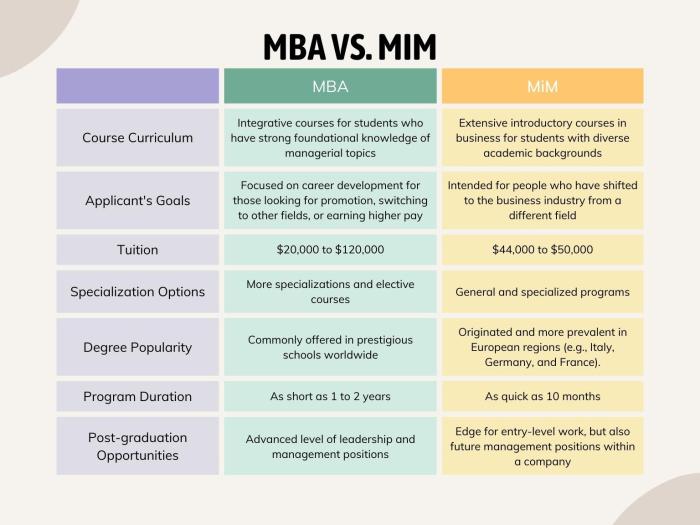
The MBA curriculum is designed to equip students with essential skills and knowledge necessary for effective management and leadership in the business world. It offers a blend of theoretical frameworks and practical applications, ensuring that graduates are well-prepared for the complexities of modern organizations. The curriculum typically consists of core courses that lay the foundation for business acumen, alongside elective courses that allow students to tailor their education according to their interests and career goals.The key components of an MBA curriculum include a mix of core courses, electives, and specialization tracks.
Core courses are fundamental and cover critical areas of study that are necessary for any business professional. These courses often include subjects like Accounting, Finance, Marketing, Operations Management, and Strategic Management. Each of these areas plays a significant role in the overall functioning and success of a business.
Core Courses and Their Relevance, MBA Curriculum Details
Core courses are essential in providing a comprehensive understanding of various business disciplines. They ensure that all MBA graduates possess a foundational level of knowledge before delving into specialized areas. Here’s a breakdown of some typical core courses and their relevance:
- Accounting: Teaches financial reporting and analysis, crucial for understanding an organization’s financial health.
- Finance: Focuses on investment strategies, financial markets, and corporate finance, essential for making informed financial decisions.
- Marketing: Covers market research, consumer behavior, and marketing strategy, vital for any business seeking to engage with customers effectively.
- Operations Management: Emphasizes efficiency and productivity in business processes, key for operational excellence.
- Strategic Management: Involves long-term planning and decision-making processes that help shape an organization’s future direction.
The integration of these core subjects ensures that MBA graduates can approach business challenges holistically and strategically.
Importance of Electives and Specialization Tracks
Electives and specialization tracks are vital components of the MBA experience, allowing students to explore specific areas of interest in greater depth. These options enable students to customize their education according to their career aspirations, enhancing their expertise in particular fields. Offering flexibility, electives can cover diverse topics such as Digital Marketing, Entrepreneurship, International Business, and Data Analytics. Engaging in specialized tracks can further deepen knowledge in areas like Healthcare Management or Finance, making graduates more competitive in the job market.
Students often select electives based on industry trends or personal interests, which can lead to unique opportunities post-graduation. For instance, a student who specializes in Entrepreneurship may launch a successful startup, leveraging the skills and networks gained throughout their MBA program.
“Customized learning paths through electives enhance not just knowledge but also employability, aligning student skills with market needs.”
Core Courses in MBA Programs
In the world of business education, core courses in MBA programs form the backbone of the learning experience. These foundational subjects equip students with essential skills and knowledge necessary for effective management and leadership in various organizational contexts. Typically, these courses are designed to provide a comprehensive understanding of business principles, practices, and analytical techniques that are critical for success in the business environment.Core courses generally cover key areas such as finance, marketing, operations management, and organizational behavior.
Each of these subjects plays a vital role in shaping a well-rounded business leader. Below, we delve into the specifics of these core courses, their objectives, and expected outcomes.
Typical Core Courses and Their Objectives
The following is a description of some common core courses found in MBA programs along with their objectives and outcomes:
- Finance: This course examines the principles of financial management, investment analysis, and capital budgeting. The objective is to develop students’ ability to make informed financial decisions. Expected outcomes include proficiency in financial analysis and understanding of market dynamics.
- Marketing: Marketing courses cover the fundamentals of market research, consumer behavior, and marketing strategy. The goal is to equip students with skills to effectively promote products and services. Students are expected to learn how to develop strategic marketing plans and analyze market trends.
- Operations Management: This course focuses on the production and delivery of goods and services. Objectives include understanding process analysis, supply chain management, and inventory control. The expected outcome is the ability to optimize operations for efficiency and effectiveness.
- Organizational Behavior: This course explores how individuals and groups behave within organizations. The objectives are to understand team dynamics, motivation, and leadership. Outcomes include enhanced interpersonal skills and effective team management techniques.
- Strategic Management: This course teaches students how to formulate and implement strategic plans. The objective is to prepare future leaders to navigate complex business environments. Students are expected to develop critical thinking and strategic analysis skills.
Comparison of Core Course Offerings Across Leading Business Schools
Different business schools may have variations in their core course offerings, but they generally follow similar themes. Below is a comparison table that highlights the core courses offered by some leading MBA programs.
| Business School | Core Courses Offered |
|---|---|
| Harvard Business School | Finance, Marketing, Operations Management, Organizational Behavior, Strategy |
| Stanford Graduate School of Business | Finance, Marketing, Operations Management, Leadership, Entrepreneurship |
| Wharton School, University of Pennsylvania | Finance, Marketing, Operations Management, Statistics, Business Law |
| MIT Sloan School of Management | Finance, Marketing, Operations Management, Data Analytics, Innovation |
| Columbia Business School | Finance, Marketing, Operations Management, Strategy, Business Communication |
Electives and Specializations

Source: mbastack.org
MBA programs offer a unique opportunity for students to tailor their education according to their career aspirations and interests. By selecting electives and specializations, students can deepen their expertise in specific areas, making them more competitive in the job market. These choices not only enhance learning but also allow students to explore diverse fields that resonate with their personal and professional goals.
Popular Elective Courses in MBA Programs
The variety of elective courses available in MBA programs enables students to pursue their passions and develop niche skills. Some of the popular electives include:
- Strategic Management
- Digital Marketing
- Financial Management
- Operations Management
- Human Resource Management
- Business Ethics
- Corporate Finance
- Supply Chain Management
- Project Management
- Negotiation and Conflict Resolution
Choosing the right electives can significantly impact students’ understanding of specific business functions and enhance their leadership abilities.
Benefits of Specializations
Specializing in a specific area can provide numerous advantages, such as targeted skill development and improved job prospects. Here are a few notable specializations:
Specializations help students stand out in a crowded job market by equipping them with relevant skills and knowledge.
- Entrepreneurship: This specialization focuses on developing innovative thinking and business acumen necessary for starting and managing new ventures.
- Data Analytics: Students learn to analyze complex data sets, enabling them to make data-driven decisions, which is highly valued in various industries.
- International Business: Understanding global markets and cross-cultural management prepares students for careers in multinational corporations.
These specializations not only enhance employability but also prepare graduates for leadership roles in their chosen fields.
Specialization Options and Career Paths
Below is a summary table of different specialization options available in MBA programs along with their associated career paths:
| Specialization | Career Paths |
|---|---|
| Entrepreneurship | Startup Founder, Business Development Manager, Venture Capital Analyst |
| Data Analytics | Data Analyst, Business Intelligence Consultant, Market Research Analyst |
| International Business | International Business Manager, Global Marketing Director, Import/Export Consultant |
| Marketing | Marketing Manager, Brand Strategist, Digital Marketing Specialist |
| Finance | Investment Banker, Financial Analyst, Risk Manager |
Each specialization allows students to focus on specific career paths, aligning their education with industry demands and personal interests.
Practical Learning Elements: MBA Curriculum Details
The MBA curriculum emphasizes the importance of practical learning elements that bridge theoretical knowledge with real-world application. This hands-on approach equips students with the necessary skills to tackle complex business challenges effectively. Practical learning not only enhances the overall educational experience but also fosters critical thinking, teamwork, and problem-solving abilities in various business scenarios.
Role of Case Studies and Real-World Projects
Case studies and real-world projects are pivotal in the MBA curriculum, allowing students to analyze and engage with actual business situations. They provide an opportunity to apply theoretical concepts to practical scenarios, enhancing analytical and decision-making skills. Through detailed examination of diverse industries, students can understand different business models and strategies.
Incorporating case studies into coursework helps students grasp the nuances of strategic decision-making. For instance, a case study on a company’s turnaround strategy enables students to critically evaluate the factors that led to success or failure, thereby preparing them for similar challenges in their careers.
Experiential Learning Opportunities
Experiential learning opportunities such as internships and consultancy projects are integral to the MBA experience. These experiences allow students to immerse themselves in the business environment and gain firsthand knowledge of industry practices. Internships often lead to valuable networking opportunities and a deeper understanding of career paths.
Consultancy projects, where students work with real companies to solve specific business problems, are another excellent way to apply classroom knowledge. For example, a group of MBA students might collaborate with a local startup to develop a marketing strategy, providing both the students and the business with insights and actionable recommendations.
Integration of Simulations and Role-Plays
Simulations and role-plays are effective teaching methods used in MBA programs to simulate real-life business scenarios. These techniques immerse students in dynamic environments where they can experiment with different strategies and witness the outcomes of their decisions in a controlled setting.
For instance, students may participate in a simulation that involves managing a virtual company, making decisions on pricing, marketing, and production. This interactive approach not only enhances engagement but also allows students to learn from their mistakes in a risk-free environment. Role-plays, where students take on various business roles, further develop soft skills such as negotiation, leadership, and communication.
“Experiential learning is the cornerstone of effective business education, bridging the gap between theory and practice.”
Assessment Methods in MBA Programs
Assessment methods in MBA programs are essential for gauging student understanding, engagement, and overall academic performance. These methods are designed not only to evaluate knowledge acquisition but also to enhance practical skills and teamwork capabilities vital in today’s business environment. By utilizing a variety of assessment techniques, programs can effectively measure a student’s ability to apply theoretical concepts to real-world situations.Different assessment methods serve distinct purposes and contribute to a comprehensive understanding of student performance.
Common methods include written exams, group projects, and presentations, each with unique implications for student learning and engagement. Continuous assessment, in particular, transforms the learning experience, encouraging students to stay engaged with the material throughout the course.
Diverse Assessment Techniques
A range of assessment methods are employed in MBA programs, each contributing uniquely to the educational experience. Understanding the advantages and disadvantages of these methods can help students and educators make informed choices about their learning and teaching approaches.
Written Exams
Offer a standardized way to measure individual knowledge and understanding.
Typically assess a broad range of topics.
Can lead to high-pressure situations, potentially affecting performance.
Group Projects
Foster teamwork and collaboration, mirroring real-world business environments.
Encourage diverse perspectives and collective problem-solving.
May result in unequal participation among group members. –
Presentations
Enhance communication skills and confidence in public speaking.
Allow students to demonstrate their understanding of complex concepts.
Can be intimidating for some, affecting their overall performance.
The continuous assessment approach, which incorporates various methods throughout the course, reinforces learning and encourages regular engagement with the material. This periodic feedback allows for timely adjustments to study habits and understanding of the subjects being taught.Assessing these methods reveals a range of benefits and challenges:
- Pros:
- Promotes a deeper understanding of material through practical application.
- Encourages collaboration and interpersonal skills, especially in group work.
- Provides ongoing feedback to help students improve their performance.
- Cons:
- May lead to stress and anxiety, particularly with high-stakes exams.
- Group dynamics can create challenges in equitable participation.
- Some students may excel in exams while struggling with practical assessments.
In summary, MBA programs utilize a variety of assessment methods to create a holistic educational experience. Each method has distinct advantages and challenges that contribute to the development of well-rounded professionals ready to tackle real-world business challenges.
Global Perspectives in MBA Curriculum

Source: onlinembareport.com
In today’s interconnected world, understanding global business dynamics is essential for any aspiring leader. MBA programs increasingly emphasize global perspectives to prepare students for the complexities of international commerce, ensuring they are equipped with the skills needed to operate effectively in diverse environments.An integral part of this global business education includes courses designed to delve into international markets, cross-cultural management, and global supply chains.
Through such courses, students not only gain theoretical knowledge but also practical insights into how businesses function across different regions. Options like study abroad programs allow students to immerse themselves in foreign cultures, enhancing their understanding of global business practices and fostering essential networking opportunities.
International Business Courses and Study Abroad Opportunities
To complement the theoretical aspects, numerous MBA programs offer specialized courses that focus on international business strategies and operations. These courses often incorporate real-world case studies and interactive projects that challenge students to think critically about global market trends. Examples of such courses include:
- International Marketing: This course explores marketing strategies tailored for different cultures and markets.
- Global Supply Chain Management: Students learn the intricacies of managing supply chains that span multiple countries.
- Cross-Cultural Leadership: This course focuses on leading diverse teams and understanding cultural nuances in global business settings.
- International Finance: It covers foreign exchange markets, international investment strategies, and financial regulations across different countries.
Study abroad opportunities are another crucial element of global perspectives in MBA programs. These experiences allow students to experience business practices firsthand in various countries, such as:
- Field studies in emerging markets like India or Brazil, where students can engage with local businesses.
- Exchange programs with partner universities in Europe or Asia, providing a chance to learn from different academic environments.
- Internships with multinational companies that have operations abroad, giving students practical experience in global settings.
“Experiencing business in a different culture is not just an educational opportunity; it’s a transformative experience that shapes your worldview.”
Impact of Global Learning Experiences on Careers
The influence of global learning experiences on MBA graduates’ careers is significant. Graduates who have engaged in international courses or study abroad programs often report enhanced employability and career advancement. The following chart illustrates the impact of these global experiences:
| Global Experience | Impact on Career Success |
|---|---|
| Study Abroad | 70% of graduates reported better job offers with higher salaries. |
| International Internships | 80% found jobs related to their international experience within 6 months of graduation. |
| Global Case Competitions | Students involved in these competitions were 60% more likely to secure leadership roles. |
By incorporating global perspectives into the MBA curriculum, programs not only enhance their academic offerings but also significantly boost their graduates’ readiness for the global marketplace, ultimately leading to successful and impactful careers.
Trends and Innovations in MBA Curriculum
The landscape of MBA education is continuously evolving, driven by various global trends and innovations that reflect the changing dynamics of the business world. Today’s MBA programs are not just about traditional business knowledge; they now encompass a broader spectrum of skills and insights that prepare graduates for modern challenges. This section delves into the recent trends shaping MBA curricula, the innovative teaching methods being adopted, and the impact of these changes on enrollment and graduate outcomes.
Recent Trends Shaping MBA Curricula
Recent trends in MBA education emphasize the importance of digital transformation and sustainability. These two key areas are redefining the skills and knowledge that business leaders must possess to navigate an increasingly complex global economy.
- Digital transformation: With the rise of technology in business processes, MBA programs are integrating digital literacy into their core curricula. This includes data analytics, artificial intelligence, and digital marketing, ensuring that graduates are equipped to lead in a tech-driven environment.
- Sustainability: As businesses face increasing scrutiny regarding their environmental impact, sustainability has become a crucial component of MBA education. Programs are now incorporating principles of sustainable business practices, corporate social responsibility, and ethical leadership.
- Diversity and Inclusion: A significant trend is the focus on creating diverse and inclusive environments within business settings. MBA programs are incorporating training on cultural competence, equity, and leadership in diverse teams to prepare students for global business challenges.
Innovative Teaching Methods in MBA Programs
Innovative teaching approaches are transforming how MBA students engage with their coursework. The integration of modern pedagogical methods enhances learning experiences and outcomes.
- Flipped classrooms: In this model, students review lecture materials at home and engage in interactive activities during class time, enabling deeper discussions and collaborative learning.
- Online learning platforms: The rise of online MBA programs offers flexibility and accessibility, allowing students to balance their studies with professional obligations. Many institutions utilize a blend of synchronous and asynchronous learning to cater to diverse learning styles.
- Experiential learning: Programs are increasingly incorporating real-world projects, internships, and simulations into the curriculum. This hands-on approach allows students to apply theoretical knowledge in practical settings, enhancing their readiness for the workforce.
Impact of Trends on Enrollment and Graduate Outcomes
The influence of these trends on MBA enrollment and graduate outcomes is significant. Data indicates that MBA programs incorporating digital and sustainability concepts see higher enrollment rates, as prospective students recognize the value of these skills in the job market.
According to a GMAC survey, 79% of employers prioritize candidates with strong digital skills and a commitment to sustainability.
Additionally, graduates from innovative MBA programs report higher job satisfaction and better career advancement opportunities, reflecting the effectiveness of these modern curricula in preparing them for today’s business challenges. An example can be seen in the rise of tech-savvy MBA graduates who are often rapidly promoted in industries such as finance, marketing, and consulting due to their ability to leverage technology effectively.Overall, the trends and innovations in MBA curricula are shaping a new generation of business leaders equipped to thrive in a dynamic and interconnected world.
Networking and Professional Development
Networking is a fundamental aspect of MBA programs, significantly impacting students’ career trajectories. Through targeted networking events and robust alumni connections, students build relationships that can lead to job opportunities, mentorship, and valuable industry insights. Engaging with peers and professionals in diverse fields not only enhances learning but also prepares graduates for future challenges in the business landscape.The value of networking extends beyond mere social interactions; it encompasses various initiatives designed to bolster professional development throughout the MBA journey.
Programs such as speaker series, workshops, and industry conferences are integral in providing firsthand knowledge and opportunities for students to engage with leaders in their respective fields. Furthermore, many MBA programs facilitate structured networking events where current students can meet alumni who have successfully navigated their careers, creating a bridge between education and the professional world.
Best Practices for Leveraging the MBA Network
Maximizing the potential of the MBA network requires strategic engagement. Here are some best practices to consider for effective career advancement:
Attend Networking Events Regularly
Frequent participation in organized networking events creates opportunities for meaningful connections. Use these platforms to meet industry professionals and fellow alumni.
Utilize Social Media Platforms
Leverage platforms like LinkedIn to connect with classmates, professors, and industry professionals. Share insights, articles, and experiences to stay visible in your network.
Participate in Alumni Associations
Join your MBA program’s alumni association to access exclusive events, mentorship programs, and updates on job openings or industry trends.
Engage in Informational Interviews
Conduct informational interviews with alumni or industry leaders. This not only helps you gather insights but also establishes a personal connection that could lead to future opportunities.
Offer Help and Share Knowledge
Networking is a two-way street. Be proactive in offering your skills or knowledge to others in your network, fostering a supportive community.
Follow Up on Connections
After meeting someone, send a follow-up email expressing your appreciation for the conversation. This helps reinforce the connection and keeps you on their radar.
Join Professional Organizations
Enroll in industry-specific groups or organizations that align with your career goals. This expands your network beyond your immediate MBA circle and provides access to a wider range of opportunities.
Engage in Team Projects
Collaborate with diverse teams in class assignments or extracurricular activities. This builds camaraderie and allows you to develop long-lasting professional relationships.
Seek Mentorship
Identify mentors within your network who can offer guidance and support as you navigate your career. Their experience can provide invaluable insights and open doors to new opportunities.
Ending Remarks
In conclusion, understanding the MBA Curriculum Details reveals the intricate design behind business education that aims to cultivate well-rounded professionals. As trends shift and innovations emerge, MBA programs continue to adapt, ensuring that students are not only prepared academically but also strategically positioned for career advancement. Whether through networking opportunities or hands-on projects, the MBA experience is crafted to help individuals thrive in the global marketplace.
Commonly Asked Questions
What is the duration of an MBA program?
Most MBA programs typically last between one to two years, depending on the format and whether the student is enrolled full-time or part-time.
Are online MBA programs as effective as traditional ones?
Yes, many online MBA programs offer the same curriculum and faculty as traditional programs, providing flexibility while maintaining academic rigor.
What are the admission requirements for an MBA program?
Admission requirements often include a completed application, GMAT or GRE scores, a bachelor’s degree, letters of recommendation, and personal statements.
Can I pursue an MBA while working full-time?
Absolutely, many MBA programs offer evening or weekend classes specifically designed for working professionals.
What is the importance of networking in an MBA program?
Networking is crucial as it provides students with opportunities to connect with industry leaders, alumni, and fellow students, often leading to job placements and collaborations.